OpenZhenZhen AI 提示词画廊 · gpt-image-2.5 · image
高级旅行地标模切贴纸纪念海报
Premium Travel Landmark Die-Cut Sticker Souvenir Poster
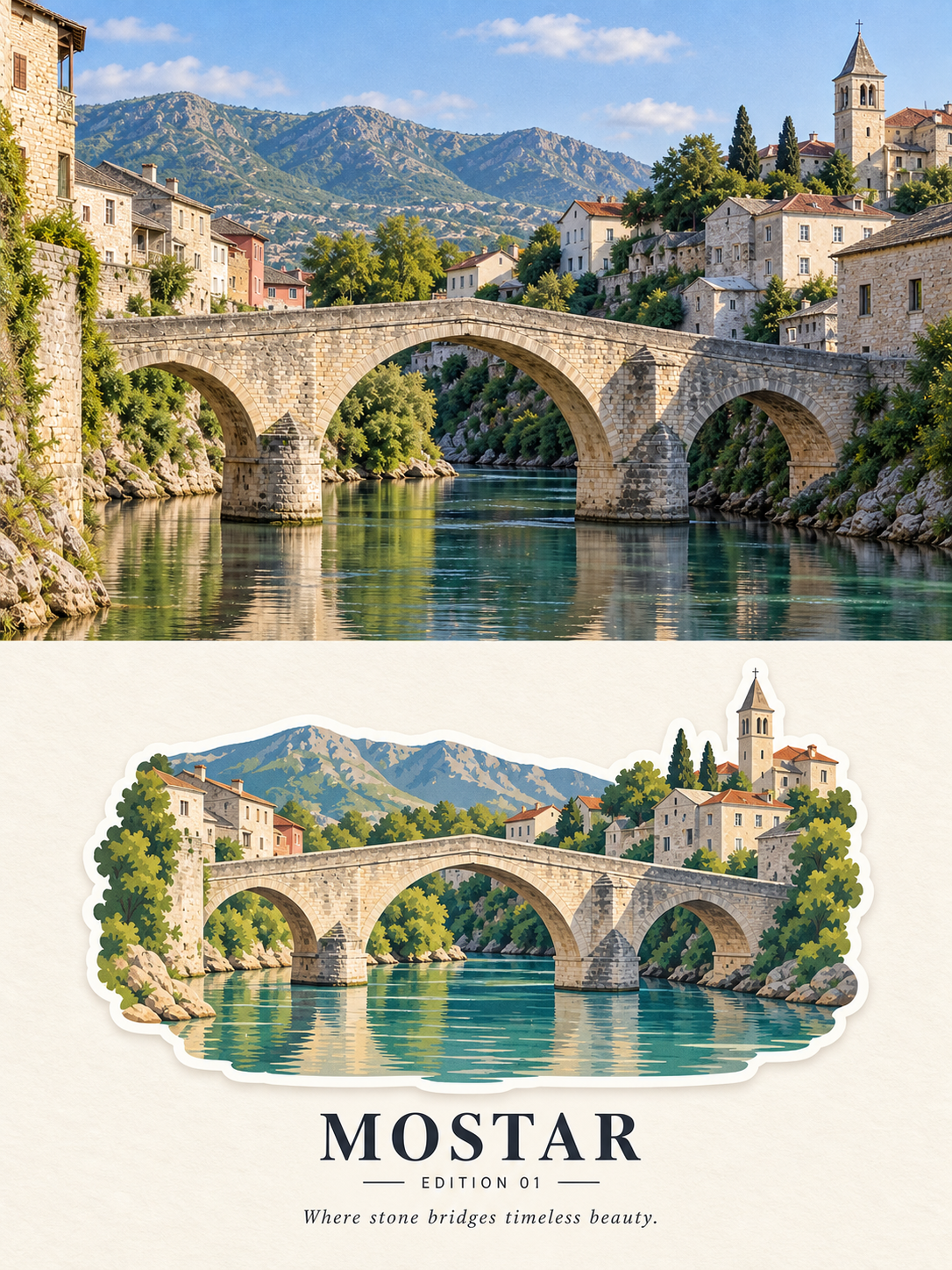
来自 OpenNana 的旅行照片编辑模板。将每一张实际上传的 travel_photo 独立制作成 3:4 高级地标模切贴纸海报;travel_photo 为必填文件输入,来源示例图不冒充用户源图,不需要人物身份绑定。
提示词 / Prompt
中文提示词
图1是为travel_photo生成的配套素材,作为本次编辑工作流对应位置实际使用的输入图像。 使用上传的 travel_photo 图像作为本次地标编辑的唯一来源照片。保留其中真实的地标身份与可见内容;该输入是旅行照片,不是人物身份参考图。 请将我上传的每一张旅行照片分别制作成一张独立的高级地标模切纪念贴纸海报,不多图拼接,每张照片单独输出。 整体采用3:4竖版编辑海报构图。真实原始照片占整张画面约40%–50%,暖米白纸面上的风格化地标贴纸占另一主要区域。两个区域之间使用笔直、清楚、没有羽化或重叠的水平边界。 照片区域忠实保留原始照片中的地标身份、建筑结构、塔楼数量、屋顶形式、立面比例、观察方向、周围环境、自然光影与原有色彩。仅进行轻微的旅行杂志和艺术出版物调色,并添加极薄胶片颗粒。不得重塑建筑、改变塔楼、镜像立面、移动主体或发明照片中不存在的结构。 转绘区域使用带有细腻天然纸纹的暖白、象牙白或浅奶油色背景,并保留约30%–55%的连续空场。只制作一枚大型、成人化、具有收藏感的地标模切贴纸。贴纸通常占纸面区域宽度约55%–78%,水平居中或略微偏置,是下方唯一的视觉主体。 从照片中提取一个最具有辨识度的主要地标,保留: - 建筑或桥梁最关键的总体外轮廓; - 塔尖、穹顶、屋顶或桥拱的节奏; - 主立面比例与主要开口; - 左右体量关系和观察方向; - 一至三种最具地点性的标志色彩。 主动删除游客、车辆、树叶、密集窗户、砖缝、雕花、招牌、现代背景建筑和远景杂物。复杂建筑群只保留识别地点所必需的主建筑与一两个从属体量。 贴纸不是照片抠图、自动描边或在照片外面增加白边。必须将地标重新绘制成明显简化的编辑插画,使用3–7种从原照片提取的扁平哑光印刷色。以大色块建立主体体量,只用少量同色深浅、细线或窄色带提示窗户比例、拱门、檐口、塔身分段和结构层级。减少微小装饰,但保持地标一眼可辨。 贴纸外围必须具有一圈连续、均匀、干净的暖白色模切边,宽度约为主体短边的2%–4%。白边沿地标真实的外轮廓行进,不使用矩形照片边框。贴纸与纸面之间只保留一层极浅、极短、方向统一的接触投影,用来确认它是一枚贴在纸上的实体印刷物。 默认在连续留白中加入: - 一个1–3个英文单词的可靠地点或场景标题; - 一个类似“EDITION 01”的版本字段; - 一句5–10个英文单词的观察句。 标题必须在正常聊天预览尺寸下清楚可读,不能小成装饰线。使用克制的深色衬线体、窄体无衬线或现代出版物字体。文字像印在同一张纪念品纸页上,与贴纸保持明确距离,不覆盖建筑轮廓。 整张作品应像博物馆商店、国际建筑事务所或独立旅行出版物中的高级纪念品页面。安静、现代、克制、有地点性,不做儿童奖励贴纸或旅行手账素材合集。 Avoid: photographic cutout, cropped photo with white outline, auto-traced photograph, multiple stickers, sticker sheet, scrapbook, postcard, tape, torn paper, postage stamp, map, route, passport icon, stars, second souvenir object, cartoon, kawaii, glossy vector icon, thick foam sticker, resin dome, enamel magnet, metal rim, invented landmark, altered tower count, generic palace, missing original-photo comparison, tiny unreadable typography, fake text, logo, watermark or mockup.
English prompt
Image 1 is the generated supporting image for travel_photo; use it as the actual input for the corresponding slot in this editing workflow. Use the uploaded travel_photo image as the sole source photograph for this landmark edit. Preserve its actual landmark identity and visible content; this input is a travel photo, not a person-identity reference. Please make each travel photo I upload into an independent premium landmark die-cut souvenir sticker poster, no multi-photo splicing, output each photo individually. The overall composition uses a 3:4 vertical poster layout. The real original photo occupies about 40%–50% of the entire frame, and the stylized landmark sticker on warm off-white paper occupies the other main area. Use a straight, clear horizontal boundary with no feathering or overlap between the two areas. The photo area faithfully preserves the landmark identity, architectural structure, number of towers, roof forms, facade proportions, observation direction, surrounding environment, natural light and shadow, and original colors from the source photo. Only perform slight travel magazine and art publication color grading, and add very thin film grain. Do not reshape buildings, change towers, mirror facades, move subjects, or invent structures that do not exist in the photo. The re-rendered area uses a warm white, ivory, or light cream background with delicate natural paper texture, and maintains about 30%–55% continuous negative space. Create only one large, adult-oriented, collectible landmark die-cut sticker. The sticker usually occupies about 55%–78% of the width of the paper area, centered horizontally or slightly offset, and is the only visual subject below. Extract the most recognizable main landmark from the photo, preserving: - The most critical overall outer contour of the building or bridge; - The rhythm of spires, domes, roofs, or bridge arches; - Main facade proportions and primary openings; - Left-right volume relationships and observation direction; - One to three of the most site-specific signature colors. Actively remove tourists, vehicles, leaves, dense windows, brick joints, carvings, signs, modern background buildings, and distant clutter. For complex building groups, only keep the main building and one or two subordinate volumes necessary to identify the location. The sticker is not a photo cutout, auto-stroke, or adding a white border outside the photo. The landmark must be redrawn as a clearly simplified editorial illustration, using 3–7 flat matte printing colors extracted from the original photo. Build the main volume with large color blocks, using only a few shades of the same color, fine lines, or narrow color bands to suggest window proportions, arches, cornices, tower segments, and structural hierarchies. Reduce tiny decorations, but keep the landmark instantly recognizable. The periphery of the sticker must have a continuous, uniform, clean warm white die-cut edge, with a width of about 2%–4% of the subject's short side. The white edge follows the actual outer contour of the landmark, not using a rectangular photo border. Only a very shallow, very short, uniformly directed contact shadow is kept between the sticker and the paper surface to confirm it is a physical printed object stuck on paper. By default, add to the continuous white space: - A reliable location or scene title of 1–3 English words; - A version field similar to 'EDITION 01'; - An observation sentence of 5–10 English words. The title must be clearly readable at normal chat preview sizes, not so small as to be a decorative line. Use restrained dark serif, narrow sans-serif, or modern publication fonts. The text looks like it's printed on the same souvenir paper page, keeping a clear distance from the sticker and not overlapping the architectural outline. The entire work should look like a premium souvenir page from a museum shop, international architectural firm, or independent travel publication. Quiet, modern, restrained, site-specific, not a children's reward sticker or a travel journal material collection. Avoid: photographic cutout, cropped photo with white outline, auto-traced photograph, multiple stickers, sticker sheet, scrapbook, postcard, tape, torn paper, postage stamp, map, route, passport icon, stars, second souvenir object, cartoon, kawaii, glossy vector icon, thick foam sticker, resin dome, enamel magnet, metal rim, invented landmark, altered tower count, generic palace, missing original-photo comparison, tiny unreadable typography, fake text, logo, watermark or mockup.
探索更多图片和视频提示词 · 生成图片 · 生成视频 · 在 AI 画布中创作
相关作品
- Miniature Mediterranean Bottle
一个古老的水晶香水瓶静静地立在阳光温暖的浅色石质桌面上,紧挨着一扇开着的地中海窗户。透明的瓶子内部存在着一个完整的微型沿海世界。错落有致的白色房屋配有陶土色屋顶,依傍着险峻的悬崖,崖上长满了鲜艳的品红色三角梅、橄榄树和细长的柏树。狭窄的石阶向下延伸,通向填满瓶子下半部的灿烂碧绿色海水。一艘微小的白色帆船在水面上漂流,微小的浪花在悬崖边闪烁。水晶的边缘像精致的透镜一样,扭曲了村庄的部分景象。瓶子后方是柔和虚化的地中海露台,带有乳白色的灰泥墙、在微风中飘动的浅色亚麻窗帘,隐约可见蓝色的海洋与天空。温暖的午后斜阳从侧面射入,在石头表面投下明亮的反光、微妙的彩虹折射以及跳跃的水波纹光影。采用绿松石色、
- Seaside Girl Portrait
电影截图,肖像摄影,杰作制作。主体是一位美丽的长发飘飘的年轻女孩,身穿白色细肩带连衣裙,眼神迷离而危险,充分展现了心机且冷傲的个性魅力。背景是蓝色的海边,海鸥自由飞翔,呈现出整体明亮清新的氛围。采用特写视角,使女孩成为画面的绝对中心,细致描绘脸部的微妙细节,光影产生的丁达尔效应为画面增添了一抹神秘感。
- Anime Roller Coaster
一张充满活力、抓拍风格的照片,拍摄于刺激的游乐园过山车冲上最高点时。画面为特写、反应风格的快照,聚焦于坐在过山车第一排的主角。该图像的视觉决定性特征是引人注目的风格对比:主角采用充满活力、干净的2D动漫插画风格呈现(辅以清晰的线条艺术、生动的动漫色彩和赛璐璐阴影),而周围的整个环境、过山车结构、背景和其他乘客则以逼真、超级详细的照片质量描绘,具有逼真的光照、运动模糊和景深。 主要主体(动漫角色) 视觉风格:富有表现力的2D动漫/漫画艺术风格,轮廓分明,特征设计富有表现力,色彩大胆、饱和且带有赛璐璐阴影。 位置与姿势:坐在过山车车厢的前景右侧中央,双手紧紧抓着安全压杠。身体向前倾斜,头发在高
- Coffee Cat Poster
小红书风格海报设计,大标题“Seedia lab”采用幼稚的手写质感字体,夸张且吸睛,小字“August 12, 2025 Coffee Cat”以手写质感字体围绕标题呈圆形排列,背景为带有黑白网点的漫画半色调质感自然风景,纸张撕裂质感,点缀着荧光色emoji表情符号,画面中心是一只扁平插画风格的白猫,手里拿着一杯咖啡,海报
- Mediterranean Balcony Portrait
创作一幅浪漫的油画风格肖像,灵感源自理查德·S·约翰逊(Richard S. Johnson)的作品。描绘一位年轻女子站在阳光普照的地中海庭院的阳台上。她若有所思地凝视着远方,她的侧影被温暖的金色光芒照亮。她黑色的波浪长发自然地散落着,突显出她优雅的颈部曲线。 她身穿一件鲜艳的红色露肩上衣,带有精致的花边和飘逸的袖子,搭配一条柔和的薄荷绿长裙。佩戴低调的珠宝:大而华丽的耳环、细手链和精致的项链。她的姿势放松而富有表现力——一只手轻轻搭在锻铁栏杆上,另一只手轻轻触碰一簇鲜红的花朵。 融入一簇繁茂下垂的红花(类似于天竺葵或九重葛)和苍翠的叶子,它们勾勒出人物的轮廓并从栏杆上倾泻而下。叶子采用半透明
- Sunset Cat Silhouette
广角镜头捕捉到一只猫科动物正走在画面中景中央一条有纹理的混凝土窗台上。主体是一个微小的黑暗剪影,从左向右移动,在戏剧性照明的天空衬托下形成剪影。左侧是一株多刺的绿色仙人掌和繁茂的枝叶,构成了一个有纹理的暗色前景区块。中景由水平的灰色混凝土墙固定,提供了一个鲜明、结实的基准线。背景完全被巨大的、翻滚的云朵占据,云朵泛着落日带来的强烈橙色和黄色光芒,衬托在深邃浓郁的蓝色天空中。构图将猫咪微小而有机的动作与云层宏大、静态的壮丽形成了对比。光线具有极强的方向性,光源来自云层后方,将前景和中景元素投射出深重的阴影,同时突出了发光的云边缘。调色板具有极高的饱和度,将温暖炽热的橙色与冷色调的暮光蓝并置。视觉