OpenZhenZhen AI 提示词画廊 · gpt-image-2.5 · image
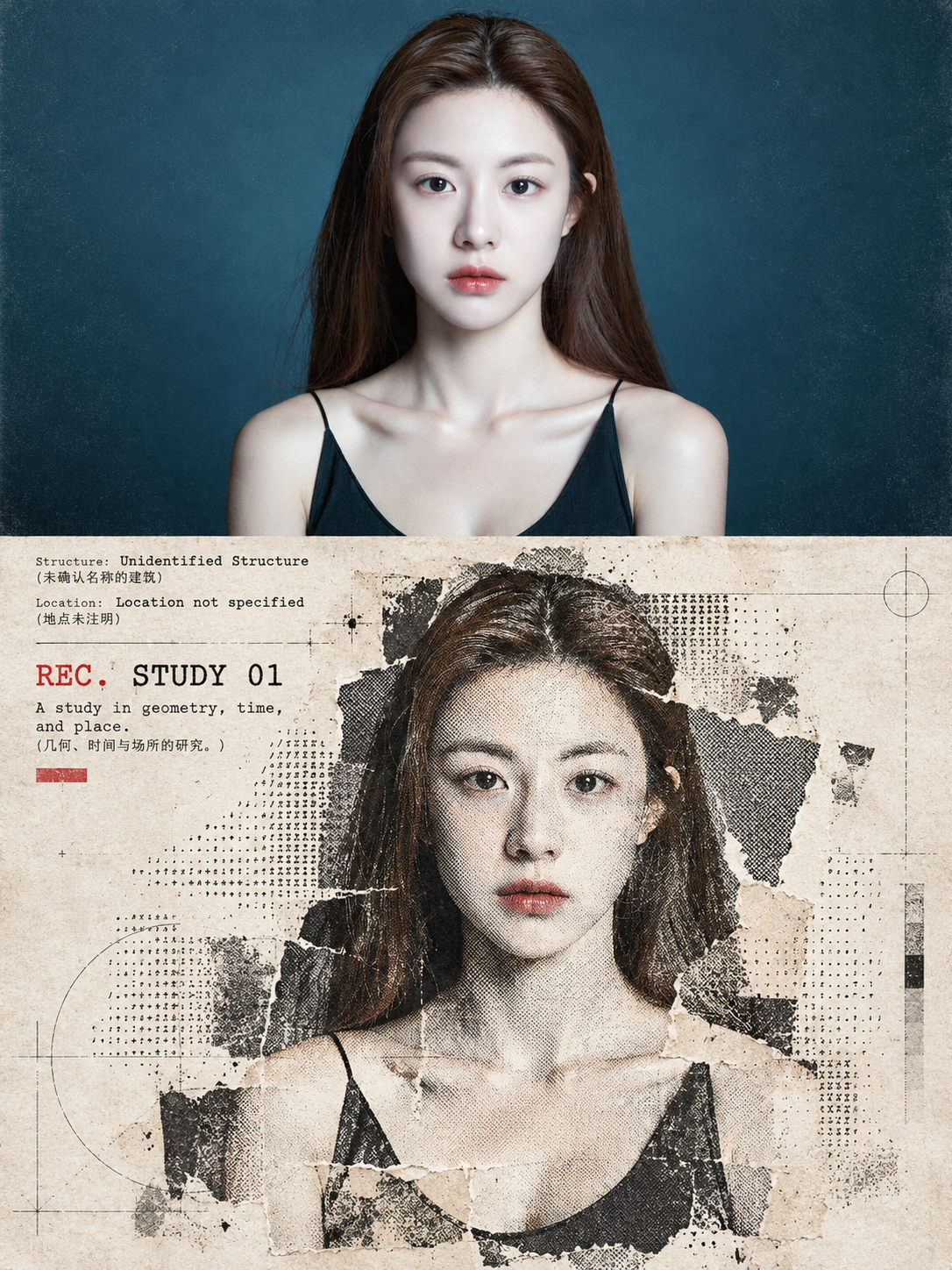
建筑档案半色调拼贴
Architectural Archive Halftone Collage
将单张建筑原片与下半部的撕裂照片、ASCII纹理、半色调网点和建筑制图线结合为3:4档案风海报;优先确保建筑身份与结构准确,留白充足并使用克制的红色校准点。
提示词 / Prompt
中文提示词
将每张上传的建筑照片分别制作成一张高端半色调建筑旅行拼贴海报;绝不把多张照片或多个建筑合并到同一画面。画布为竖幅3:4,上下两个水平区域大致等高,以一条干净锐利的横线分隔:上方是真实建筑原片,下方是印刷重建。绝不拉伸、扭曲、倾斜或不自然地重新摆放建筑。上半部分——忠实保留同一建筑的结构、比例、透视、立面、窗户/拱门、塔楼/穹顶、门、结构细节、屋顶线、周边环境、自然光影和原有色调。只做细微高端调色与极轻胶片颗粒,不重新设计建筑。下半部分——将同一建筑重建为可立即辨认的实验性印刷拼贴,结合撕裂照片碎片、等宽ASCII字符域、复印半色调网点和建筑线描。撕边照片碎片保留关键建筑细节;砖、石、玻璃、金属、阴影、窗户和周边纹理向外逐渐溶解为ASCII纹理、黑色半色调网点、碎片化印刷颗粒和精细制图线。细技术线只描绘原图中实际可见的几何结构。选定区域分解为纸纤维和半色调碎片,仿佛建筑正从档案印刷品中浮现;主轮廓保持鲜明并一眼可辨。使用粗糙白纸纤维边缘、细微复印瑕疵、轻微套印偏差、褪色墨迹、旧纸污渍、少量克制裁切标记和一条小型红色校准条。配色为暖灰旧纸、黑墨、建筑原有柔和色彩和一种克制红色点缀;不可将建筑完全去色。根据建筑形状将其缩放至画幅宽度约60–88%,并留出22–38%明显未印刷纸面,形成充足负空间。使用清晰易读的等宽字体排版以下字段:建筑名称:未确认名称的建筑(Unidentified Structure) 地点:地点未注明(Location not specified) REC. STUDY 01 几何、时间与场所的研究。(A study in geometry, time, and place.)。标题和观察说明须基于照片中真实建筑;若建筑名称或地点未经核实,保留明确的“未确认/未注明”默认字样,不要编造事实。排版融合旧建筑档案与地下实验设计杂志感。少量松散ASCII字符只能作为外轮廓或建筑边缘的纹理,不得用ASCII虚构窗户、门、结构细节或技术规格。整体氛围融合早期数字系统、模拟复印、建筑档案、地下杂志与现代旅行社论。建筑仿佛从旧印刷文件中浮现——一部分照片、一部分建筑图纸、一部分实验印刷品;考究、极简、有触感、理智、略带神秘且具有收藏感。避免纯黑终端背景、密集代码墙、赛博朋克霓虹、过量ASCII、扭曲建筑、不可能几何、虚构建筑细节、虚假技术规格、无意义随机符号、乱码、过多颜色、品牌标志、二维码、水印、作者署名和旅游海报陈词滥调。首要原则是保留建筑身份与结构准确性;半色调/ASCII实验效果只能增强建筑表现,不能遮蔽它。
English prompt
Create one high-end halftone architectural travel-collage poster from each uploaded structure photo; never merge multiple photos or buildings. Use a vertical 3:4 canvas with two approximately equal horizontal zones, separated by one clean sharp line: the real architectural photograph above and a printed reconstruction below. Never stretch, warp, tilt or unnaturally reposition the structure. TOP — faithfully preserve the same architecture, proportions, perspective, façade, windows/arches, towers/domes, doors, structural details, roofline, surroundings, natural light/shadow and original color mood. Add only subtle high-end color grading and the faintest film grain; do not redesign it. BOTTOM — rebuild that same recognizable structure as an experimental printed collage of torn photographic fragments, fixed-width ASCII character fields, photocopy halftone dots and architectural linework. Torn photo fragments retain key architectural details; brick, stone, glass, metal, shadows, windows and nearby textures dissolve outward into ASCII texture, black halftone dots, fragmented print grain and fine drafting lines. Use thin technical lines only to trace geometry actually visible in the source. Let selected areas break into paper fibers and halftone, as if the building emerges from an archival print; keep its main silhouette strong and immediately recognizable. Use rough white paper-fiber edges, subtle photocopy flaws, slight print misregistration, faded ink, old-paper stains, a few restrained crop marks and one small red calibration bar. Palette: warm-gray old paper, black ink, the structure's original muted colors and one restrained red accent; never fully desaturate the building. Scale the structure to roughly 60–88% of frame width as best suits its shape, and leave 22–38% of paper visibly untouched for generous negative space. Add clean readable fixed-width typography using these fields: Structure: Unidentified Structure (未确认名称的建筑) Location: Location not specified (地点未注明) REC. STUDY 01 A study in geometry, time, and place. (几何、时间与场所的研究。). Base the title and any observation on the actual photographed architecture. If its name or location is not verified, keep the defaults as explicit unknown/not-specified text rather than inventing facts. Typography should blend an old architectural archive with an underground experimental design journal. A few loose ASCII glyphs may trace only the outer silhouette or edges as texture; never use ASCII to invent windows, doors, structural details or technical specifications. Mood: early digital systems, analog photocopy, architectural archive, underground zine and modern travel editorial. The structure should feel as if surfacing from an old printed document—part photograph, part architectural drawing and part experimental print. Sophisticated, minimal, tactile, intellectual, slightly mysterious and collectible. Avoid solid-black terminal backgrounds, dense code walls, cyberpunk neon, excessive ASCII, distorted architecture, impossible geometry, invented architectural details, fake technical specifications, meaningless random symbols, garbled text, excessive colors, brand logos, QR codes, watermarks, author credits and tourist-poster clichés. Priority: preserve the building's identity and architectural accuracy; experimental halftone/ASCII should enhance rather than obscure it.
探索更多图片和视频提示词 · 生成图片 · 生成视频 · 在 AI 画布中创作
相关作品
- 地铁车厢抓拍低头看手机成年女性
A respectful candid-style portrait of a fully clothed adult woman looking at her phone in a public subway carriage, with the original right-third subject placement and soft foreground obstruction. / 普通公共地铁车厢内,衣着完整的成年女性自然低头看手机;保留原有右侧三分之一人物布局和柔焦前景遮挡的抓拍构图。
- 暖光咖啡馆里的蓝羽女孩
A hyper-realistic cafe portrait of a seated adult woman in a light-blue feathered jacket, with a croissant in the foreground and crisp iPhone 15 Pro detail; exact appearance is reference-dependent.
- 东方禅意海棠粉极简女性封面
A gentle ancient-inspired adult-woman portrait framed by begonia-pink shadows, pearl white and quiet title space. / 以海棠粉花影、珍珠白背景与留白标题区衬托古风成年女性柔美肖像的极简封面。
- 高精度3D东方幻想女性角色设计
A stylized adult fantasy woman in a lake-blue silk gown, sculptural double-ring hair and layered moon-white gauze. / 身穿湖蓝真丝礼裙、搭配雕塑感双环发髻与月白层叠轻纱的风格化成年幻想女性。
- 疲惫漂亮女孩廉价旅馆洗手台纪实时尚摄影
A dramatic, candid documentary-fashion portrait of an adult woman leaning over a table at a modest hotel sink. / 成年女性在简朴旅馆洗手台前撑桌前倾的戏剧化纪实时尚人像。
- 中国地铁车厢女生生活抓拍写实人像
An adult woman photographs a three-line message on a phone in a modern subway, with distinct background passengers. / 成年女性在现代地铁车厢内以手机呈现三行文字,背景乘客彼此区分。