OpenZhenZhen AI 提示词画廊 · gpt-image-2.5 · image
当代东方美学原片与极简水墨重构视觉
Contemporary Eastern Aesthetics: Original Photography and Minimalist Ink Reconstruction
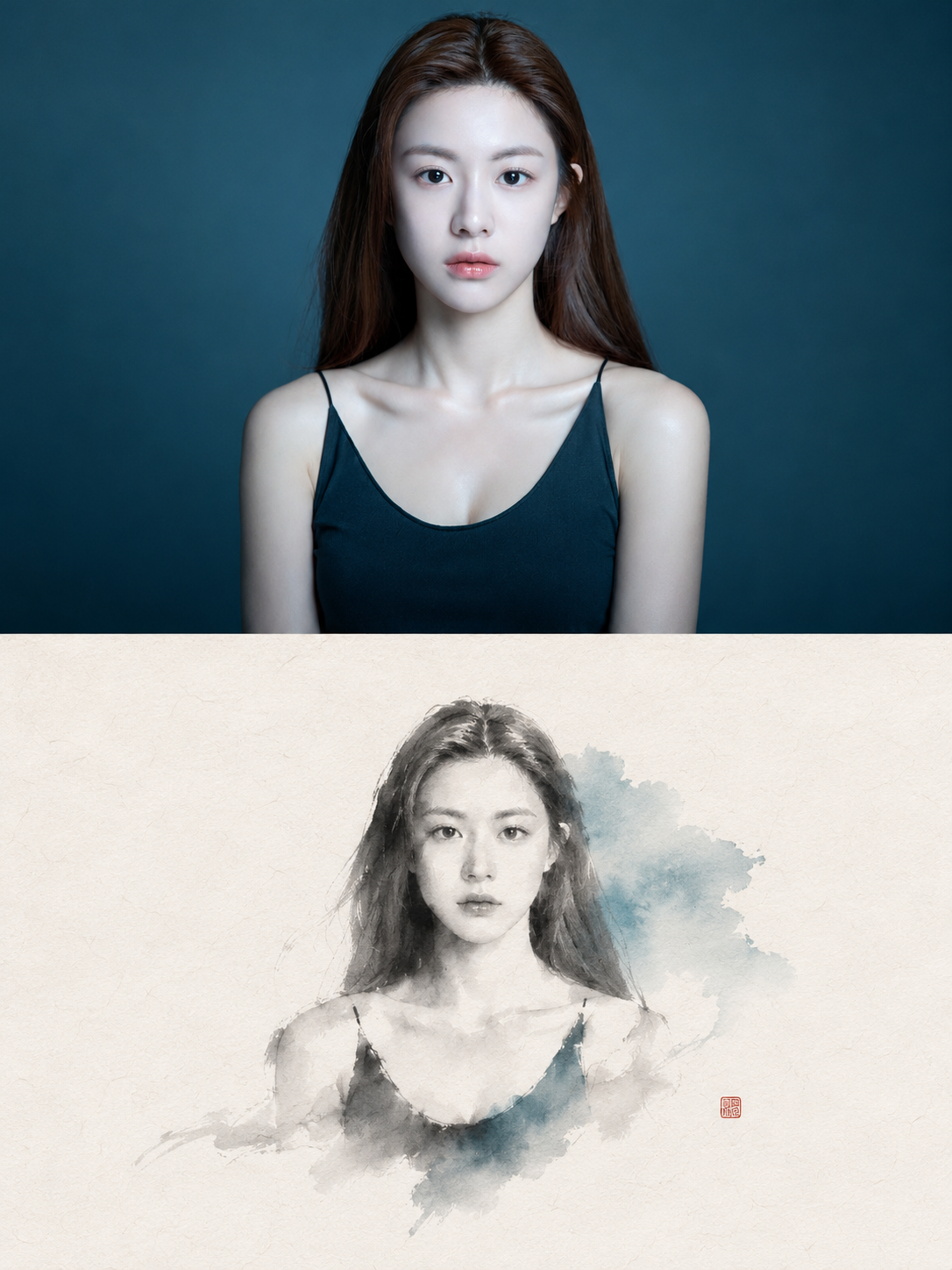
A 3:4 split composition with a lightly refined original portrait above and a small, spacious ink-wash portrait study below. / 3:4上下分屏:上方轻度精修原始人像,下方以水墨重构小幅主体并保留充足留白。
提示词 / Prompt
中文提示词
将绑定到 identity_reference(ref-10a-v1)的唯一整幅照片作为完整原图和唯一来源。图中是一位成年女性。创作3:4竖版构图,上下分为两个等大区域,严格按1:1分配,各占全图50%。 上半区域——原始摄影 保留女性身份、可见结构、比例、姿势、透视、真实材质、自然光线和原有色彩氛围。只做轻微高级调色与图像精修,呈现艺术杂志或展览摄影质感。为适配画布,可适度延展现有纯青蓝背景;不得拉伸、扭曲或重塑女性,也不得改变姿势和核心构图。不得虚构照片外的身体部位或场景事实。 下半区域——极简水墨重构 提炼同一肖像最令人难忘的可见特征:轮廓、面部结构、发型、姿势、视线、空间节奏与安静气息。将同一场景重构为极简水墨材质小品,不做写实复制。只保留最具辨识度的结构与神韵,使人与上方原照的对应关系一眼可见。底色使用奶白、暖白或纸白,并呈现细腻纸纤维和自然纹理。以水墨晕染、干湿交替、飞白、渗化、积墨和有意留白构成人像。去除次要细节,只留独特轮廓、结构转折、空间层次与气息。使用层层递进、浓淡有致的黑、灰、浅墨色调。 可从原照提取少量局部色彩点染,不机械复制数值。本照片可将醒目的青蓝背景转为克制清澈的蓝灰或远山蓝;整体仍以墨色和留白为主。避免沉闷厚重的陈旧棕色、过度装饰和庸俗配色。 将精炼的主体核心集中呈现,再让边缘逐渐松散、断裂、淡去、散开,与留白形成呼吸感。水墨主体约占下半区域的30%-45%,其余留给充足留白。可偏移、视觉框景、悬浮或轻微裁切,但须保持非对称平衡,并保留可辨认的人像轮廓。留白是结构的一部分;宁可减少信息也不要填满画面。让小幅核心作品像展示在纸页上的水墨印章或东方材质小品。 文字 默认不出现可见文字。若少量文字确实有助于画面,只用几字,从可见情绪或姿态中提取,克制地放在留白处或主体边缘。不要预设标题或数字,也不要编造姓名、地点或时间。 整体采用当代东方美学、极简水墨重构、大面积艺术留白、小比例印章式主体、宁静编辑布局与展览海报气质。避免复杂背景、堆砌写实细节、过度装饰、过多文字、模板化布局或填满画面。
English prompt
Use the single attached full photograph bound to identity_reference (ref-10a-v1) as the complete original image and sole source. It shows one adult woman. Create a 3:4 vertical composition divided into two equal regions in a strict 1:1 top-to-bottom allocation, each occupying 50% of the image. UPPER REGION — ORIGINAL PHOTOGRAPH Preserve the woman's identity, visible structure, proportions, pose, perspective, natural material, original light and color atmosphere. Apply only slight high-end color grading and image refinement, like an art-magazine or exhibition photograph. Moderate extension of the existing plain teal-blue background is allowed to fit the canvas; do not stretch, distort or reshape the woman or change her posture or core composition. Do not invent unseen body parts or scene facts. LOWER REGION — MINIMAL INK-WASH RECONSTRUCTION Extract the most memorable visible qualities of the same portrait: silhouette, facial structure, hair, pose, gaze, spatial rhythm and quiet mood. Reconstruct the same scene as a minimalist ink-wash material study, not a realistic copy. Preserve only its most recognizable structure and charm so its connection to the upper photograph is immediately clear. Use a milky-white, warm-white or paper-white ground with delicate paper fibers and natural texture. Build the portrait with ink washes, dry/wet interplay, flying-white brushwork, seepage, pooled ink and purposeful blank space. Remove secondary detail; retain distinctive contours, structural turns, spatial layers and atmosphere. Use layered black, gray and pale ink tones with varied intensity and rhythm. A few localized color accents may be extracted from the source rather than copied mechanically. For this photo, use its vivid teal-blue translated into restrained clear blue-gray or distant blue; keep ink tones and negative space dominant. Avoid dull heavy old-brown tones, excessive decoration and vulgar color combinations. Concentrate the refined core artwork, then let its edges loosen, break, fade and disperse into breathing room. The core ink-wash subject should occupy about 30%-45% of the lower region, with the rest reserved for generous negative space. An offset, visually framed, suspended or slightly cropped arrangement is acceptable if asymmetrical balance and the subject's recognizable portrait silhouette remain. Treat negative space as an active part of the structure; reduce information rather than filling the panel. Let the small central work feel like an ink seal or an Eastern material study displayed on a page. TEXT Default to no visible text. If a tiny amount genuinely helps, use only a few restrained words derived from visible emotion or pose, placed quietly in the blank area or near the subject. Do not preset titles or numbers, or invent a name, location or time. Overall, use contemporary Eastern aesthetics, minimalist ink-wash reconstruction, expansive artistic blank space, a small seal-like core, quiet editorial layout and an exhibition-poster sensibility. Avoid complex backgrounds, piled-up realistic detail, excessive decoration, excessive text, template-like layout or a filled composition.
探索更多图片和视频提示词 · 生成图片 · 生成视频 · 在 AI 画布中创作
相关作品
- 黑金气球与奶油缎面礼服生日肖像
使用 ref-10a-v1 保持同一成年女性的身份,创作微笑的全身居中 4K 目标摄影棚肖像。她手持大型金属金箔数字气球,默认显示 30;Age 是可改的成年虚构生日主题,不代表参考人物的真实年龄。她身穿奶油色闪亮缎面礼服,站在纯黑背景前。以黑、亮金和浅牛仔蓝为主色,柔和直射棚灯照亮气球光泽与飘逸金色丝带,呈现欢快庆生氛围。
- 街边低角度蹲姿线描插画
使用 ref-10a-v1 保持同一成年女性的面部身份与深色长发。以专业细致笔触创作竖向 9:16 插画:她在街边蹲下,神情放松自信,观者略微仰视。服装只呈现参考中实际可见的黑色细肩带上衣,并保持其设计;腰部以上取景,不显示参考未呈现的下装或身体细节。
- 千禧年数码相机颗粒感随拍人像
以 ref-10a-v1 中同一人物作为明确的人像预览默认,创作随意的胸像快照,穿简洁纯色休闲上衣、背景为朴素室内环境。整体模拟 21 世纪初数码相机快照:直接机顶闪光、明显颗粒、低分辨率与稍显粗粝的数码质感。
- 紫色机能夹克与巨型机械外骨骼背包
使用 ref-10a-v1 保持同一成年女性的面部结构、肤质、表情和身份。创作 2:3、8K 的超写实电影肖像:赛博朋克机械师强劲沉稳地站在简洁工业车间,身穿带战术绑带、多功能袋、加固装甲板和未来纹理的紫色机能夹克,背负巨型工业机械外骨骼背包,包含大型引擎核心、裸露电线与电缆、金属管道和液压管、重型装甲板、机械关节及连接器。主体与背包锐利对焦;电影工业光结合戏剧性柔影、冷暖高光、微妙体积光及金属反射发光。浅景深、柔和背景分离,超高细节皮肤、织物、金属质感。避免卡通、低细节、扭曲、水印、文字叠加和不真实解剖。
- 蓝图线描与几何解构肖像
使用 ref-10a-v1 保持同一人物面部身份,创作超精细现代主义编辑插画。将面部拆分为层叠几何区域,在面部平面嵌入技术图、城市室内结构、结构网格与抽象建筑;以细墨线、交叉排线和雕刻式阴影绘制。干净白底铺满密集黑色线稿,仅在选定区域使用深红、柔和蓝、暖黄三种强调色,并以平面色块和半透明叠层呈现。配细圆框眼镜和锐利沉思的眼神,平衡对称、高对比、边缘清晰,达到海报级和专业杂志封面的清晰度。避免写实摄影、柔焦、绘画笔触、油画、低细节、杂乱色彩、卡通和夸张比例。
- 闪光灯与镜头围拢的高定名利场
使用 ref-10a-v1 保持主体面部、特征与整体身份清晰可辨。将主体置于高级时装狗仔围堵场景中央,来自各方向的相机、麦克风和挑杆麦克风紧密环绕,镜头与麦克风向内交叠并局部遮挡主体,形成对称、逼仄的媒体关注感。表情平静克制、难以捉摸,自信而疏远。选用利落深色服装、不戴眼镜作为造型默认值;以直闪、高光、深影和设备真实纹理呈现冷中性色调的电影感时尚抓拍。